| Home | Sign up for Highlander Newsletter | Order Free Brochures and & More Info | Purchase Unique Gifts, Books, Photos & Artwork |
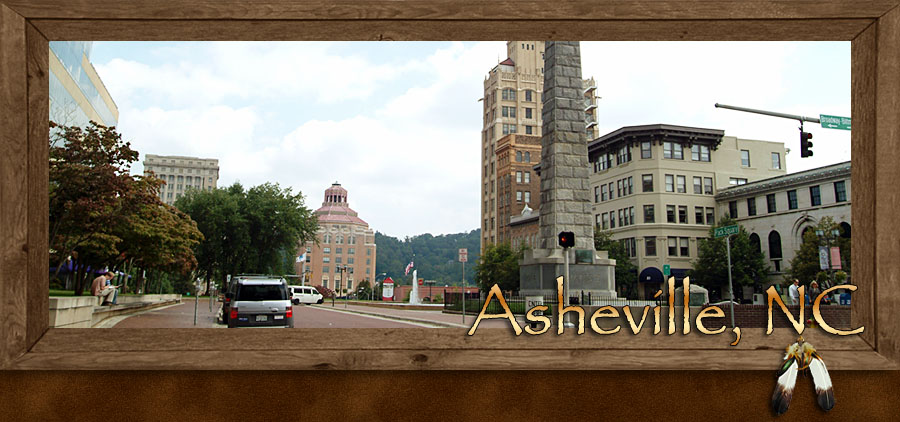
Asheville North Carolina in the Blue Ridge Mountains
Real Estate • Travel • Lodging • Restaurants • Art Galleries • Shopping • Entertainment • Recreation
|
Located in the central Blue Ridge Mountains is
the historical city of Asheville…Buncombe County North
Carolina. Asheville is a mountain city of beauty and character,
a city of culture, atmosphere, and style with a vast array 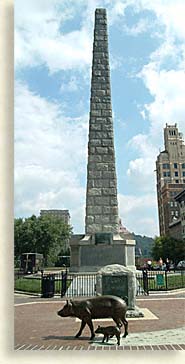 of
culinary delights. This city of Art-Deco architecture seems
lost in time, preserved as a statement of big dreams and progress
in a laid-back mountain setting. An ideal location for
those who wish to visit the Blue Ridge Mountains yet want the
conveniences of a large metropolitan.
of
culinary delights. This city of Art-Deco architecture seems
lost in time, preserved as a statement of big dreams and progress
in a laid-back mountain setting. An ideal location for
those who wish to visit the Blue Ridge Mountains yet want the
conveniences of a large metropolitan.
In a valley surrounded by mountains Asheville was a small crossroads town when pioneer planner and real estate broker John Burton founded it in 1793. Known as Morristown during its earlier years, the city was also called Buncombe until 1797, when it was incorporated and officially named Asheville in honor of North Carolina Governor Samuel Ashe of New Hanover County. At the time, Battle Square, present site of Battery Park Hotel, stood more then 100 feet above its present height and was called River Hill.
The city of Asheville is located on a plateau divided by the French Broad River with and average elevation of 2165 feet. Many of the surrounding mountains are above 5000-feet with Mount Mitchell towering at nearly 7,000 feet.
Buncombe attained county status on January 14, 1792 and was named for Revolutionary War hero Colonel Edward Buncombe. After the construction of the Buncombe Turnpike in 1827, Asheville soon became a focal point for speculators and adventurers.
In 1882 the town of Asheville was expanded and made the city of Asheville. More and more visitors started to arrive in the Asheville area as soon as additional roads were built. They were drawn by the crisp mountain air, incredible vistas, and an abundance of sulfur springs along with the invigorating mountain climate and natural resources. When the railroad finally reached Asheville in 1880 it brought power and affluence with it, including a young aristocrat from New York named George Washington Vanderbilt in 1888.
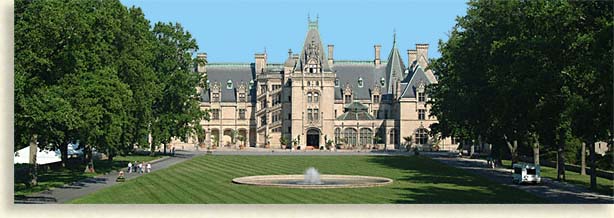
George Washington Vanderbilt began construction on his now-famous mansion at the 100,000 - 125,00 acre Biltmore Estate, just south of the city completing the castle style mansion in 1895. George Vanderbilt vision was instrumental in the founding of one of the first forestry schools in America in 1898, the Biltmore Forest School.
Along with those great accomplishments George Vanderbilt is credited for the purchase and reconstruction of a town that was necessary to support the day-to-day operations of Biltmore Estate. In 1889, George Vanderbilt purchased the neighboring town of Best and renamed it Biltmore Village creating a community for his estate employees. Today Biltmore Village is a quaint town of a distinctive mixture of shops, galleries and restaurants. The brick sidewalks and 19th century cottages are reminiscent of an old English village.
Since the 1930’s Biltmore Estate has been opened to the public for daily tours of the Biltmore House and self guided tours of the present day Estate’s 7,000-acres. As per George Vanderbilt’s wishes, Edith Vanderbilt sold 87,000 acres to the federal government in 1915 establishing the core of the Pisgah Nation Forest.
 Asheville’s
greatest boom was in the 1920’s with developments that
included the Jackson Building, City Building, Buncombe County
Courthouse, Grove Arcade, Battery Park Hotel, Flat Iron Building,
and the Bon Marche Building. More Art Deco architecture was constructed
in the late 1920’s and early 1930’s in downtown Asheville
than in any other city in the southeast with the exception of
Miami Beach, Florida.
Asheville’s
greatest boom was in the 1920’s with developments that
included the Jackson Building, City Building, Buncombe County
Courthouse, Grove Arcade, Battery Park Hotel, Flat Iron Building,
and the Bon Marche Building. More Art Deco architecture was constructed
in the late 1920’s and early 1930’s in downtown Asheville
than in any other city in the southeast with the exception of
Miami Beach, Florida.
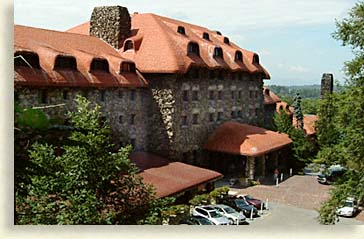
Asheville soon became a popular health resort and vacation retreat, attracting the wealthy, dignitaries and many celebrities. Grand hotels such as the Battery Park and Grove Park Inn were built to accommodate the many guest, Asheville quickly became a swirling social center for such urban and sophisticated travelers such as F. Scott Fitzgerald who frequented the Grove Park Inn’s room 44. Franklin and Eleanor Roosevelt took many vacations at the Grove Park Inn along with inventor Thomas Edison to name a few.
Asheville was flying high and it was a time
when outsiders had come to appreciate the 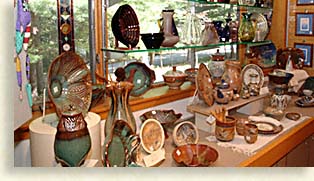 handicrafts
and folk art of the native mountain people. The popular Southern
Highland Craft Guild was formed here in 1928 to preserve those
traditions. The Southern Highland Craft Guild is located in the
Folk Art Center, you can find directional signs on the Blue
Ridge Parkway.
handicrafts
and folk art of the native mountain people. The popular Southern
Highland Craft Guild was formed here in 1928 to preserve those
traditions. The Southern Highland Craft Guild is located in the
Folk Art Center, you can find directional signs on the Blue
Ridge Parkway.
Asheville is North Carolina’s most architecturally
diverse city. Queen Anne, Romanesque, Revival, and Art Deco.
Edwin Wiley Grove’s Arcade, is a lavishly ornamented Gothic
structure dominating an entire city block and recently reopened
as a public 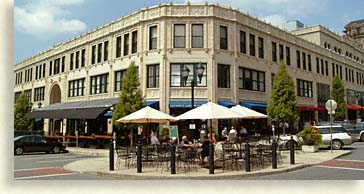 market. Asheville City Hall was designed by noted
architect Douglas Ellington and completed in 1928. The Basilica
of St. Lawrence, completed in 1909, is a stunning example of
the Spanish Baroque Revival style. In the stately residential
neighborhoods many of the Greek Revival, Queen Anne Victorian,
and English Tudors are now operated as Bed and Breakfasts. In
2002, The National Trust for Historic Preservation named Asheville
one of “America’s Dozen Distinctive Destinations” and
described the city as, “ offering diverse natural, historic,
cultural experiences that preserve generations of Appalachian
tradition.”
market. Asheville City Hall was designed by noted
architect Douglas Ellington and completed in 1928. The Basilica
of St. Lawrence, completed in 1909, is a stunning example of
the Spanish Baroque Revival style. In the stately residential
neighborhoods many of the Greek Revival, Queen Anne Victorian,
and English Tudors are now operated as Bed and Breakfasts. In
2002, The National Trust for Historic Preservation named Asheville
one of “America’s Dozen Distinctive Destinations” and
described the city as, “ offering diverse natural, historic,
cultural experiences that preserve generations of Appalachian
tradition.”
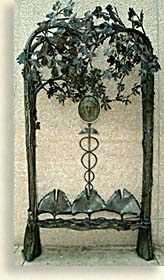 Asheville’s “Urban
Trail,” tells a tale in works of art in a gallery set under
the open sky. This unique expression of historical achievements
tells the story of the city of Asheville along with its renowned
citizens through an intriguing array of public artworks created
by area artists. It covers nearly a 2-mile loop in downtown Asheville
with marked art stations and information about its historic architecture.
You can take a guided tour or use a map available at the Chamber
of Commerce. It’s a pleasant stroll, highlighted
by the city's natural beauty. Audiotapes guides are available
at the Asheville Art Museum and Thomas Wolfe Museum.
Asheville’s “Urban
Trail,” tells a tale in works of art in a gallery set under
the open sky. This unique expression of historical achievements
tells the story of the city of Asheville along with its renowned
citizens through an intriguing array of public artworks created
by area artists. It covers nearly a 2-mile loop in downtown Asheville
with marked art stations and information about its historic architecture.
You can take a guided tour or use a map available at the Chamber
of Commerce. It’s a pleasant stroll, highlighted
by the city's natural beauty. Audiotapes guides are available
at the Asheville Art Museum and Thomas Wolfe Museum.
After the American Revolutionary War, mainly
Scotch-Irish immigrants from Northern Ireland settled Asheville.
Bele Chere is North Carolina's largest street festival. This
popular Asheville festival lasts for 3 days and is held in the
cities downtown area, with a celebration of music, food, crafts
and more. Each August, Asheville celebrates its Appalachian
Heritage at the Mountain Dance and Folk Festival – the
oldest festival of it’s kind in the nation.
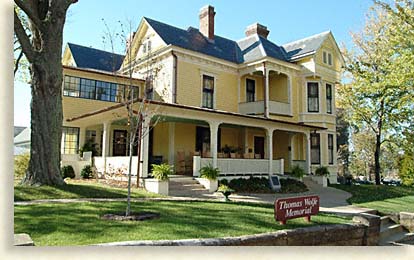
Author Thomas Wolfe’s boyhood home, at 48 Spruce Street, is one of the most important landmarks in American literature. The ramshackle boardinghouse, owned and operated by Wolfe’s mother at the turn of the century, provided the setting for the author’s autobiographical masterpiece, “Look Homeward, Angel.”
The Asheville literary tradition continues with authors O. Henry and Carl Sandburg, as well as Fred Chappell, North Carolina poet laureate, Gail Godwin novelist who wrote Father Melancholy’s Daughter. A few other literary works originating from Asheville are Charles Frazier's Cold Mountain, Robert Morgan's The Rock, Wilma Dykeman's The Tall Woman and John Ehle's Trail of Tears. USA Today named Asheville one of America’s “Top 10 Literary Destinations” and Book Magazine raked it 3rd in it’s “Top 10 Great Literary Trips”
Another Asheville attraction is the North Carolina Arboretum, boasting more than 100 Bonsai plants in their collection. Mr. and Mrs. George Staples of Butner donated the arboretum’s original bonsai in 1992 from their private collection. The collection now includes many plants native to western North Carolina. All of the trees are either donated or grown at the arboretum. Plans are underway for a 1.8 million permanent Bonsai garden at the arboretum. The ground was broken in late 2003 and expected to be open by early 2005.
If it's outdoor adventure your looking for, the Asheville region has what you are looking for. Local outdoor activities such as hiking on the Appalachian Trail, rock hunting for precious gems, fishing for trout in the clear mountain streams, white water rafting, or a cruise along the Blue Ridge Parkway. In 2002 Bike Magazine named Asheville in the Top 5 mountain biking towns. Canoe and Kayak magazine named Asheville one of the top 10 paddle towns in the United States in 2001. In 2001 Whitewater Paddling magazine made Asheville a Top 10 White Water Town. You can choose a gentle float down the French Broad River, or a rollicking white water raft ride down the French Broad.
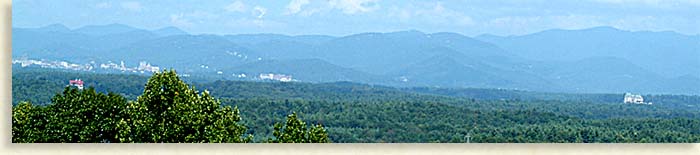
Another site of interest is the Black Mountain region just east of Asheville. First settled in the 1780’s the community was originally known as Gray Eagle. The name was changed in 1870 in reference to the lofty range five miles to the north. Stroll down Main Street through the town’s lively center for crafts and shopping, and you’ll be surprised how little things have changed. You may catch a craftsman strumming a handmade dulcimer or observe artisans working right out of their stores. You can also explore the old hardware store and the 1890’s depot.
The Asheville area of Buncombe County is in the heart of the Blue Ridge Mountains; from lavish accommodations to the rugged backpacking through the Blue Ridge Mountains, Asheville has exactly what you’re looking for when planning your next fun filled vacation or a new way of life.


| Real Estate in Asheville and Surrounding Buncombe County | |
 |
|
 |
Golden Valley Getaways in Golden Valley North Carolina Featured in USA Today ! |

Sign up for the Blue Ridge Highlander Newsletter, Messages from the Mountains
to find out first about our new feature stories, road trips and special offers
Your e-mail addresses will not be sold or given away to anyone.
Privacy Policy
Interested in your business being on the Highlander, click here...
Let our visitors tell you about the Highlander...
Click the feathers to go to the Highlander site
map...

Your e-mail addresses will not be sold or given away to anyone.
Let our visitors tell you about the Highlander...
Click the feathers to go to the Highlander site
map...
Highlander Special Interests
Great Mountain Attractions and Destinations Links to All Highlander Advertisers
Blue Ridge Highlander Mountain Emporium Art Gallery Photo Gallery Handmade Products Book Store
Magazine, Virtual Tours and Scenic Road Trips Creative Mountain Classes Just for Kids
Living Green and Eco Friendly in the Mountains Gardening in the Mountains Mountain Recipes
Mountain and Native American History Nathanael O. Smith - Storyteller Mysteries, Myths and Legends in the Mountains
Mountain Cathedral Charities and Fundraisers
Great Mountain Retreats
Adventure - Art - Cooking - Corporate - Family - Friend - Yoga - Wellness - Youth
Learn More About the Towns and Cities in the Mountains
North Georgia Mountains Western North Carolina Mountains
Up Country South Carolina Tennessee River Valley and Mountains
Great Smoky Mountains Blue Ridge Parkway
Move to or Invest in the Mountains
Real Estate - Log Homes - Cabins - Homes - Land - Acreage - Commercial Real Estate
North Georgia Mountain Real Estate Western North Carolina Real Estate
Tennessee River Valley and Smoky Mountain Real Estate
Traveling - Living - Enjoying the Mountains
Log Cabin Rentals - Vacation Rentals - Resorts - Condos - Inns - Hotels - Bed and Breakfasts
North Georgia Mountain Lodging Western North Carolina Lodging Tennessee River Valley Lodging
Plan a Mountain Wedding or Gatherings Conference, Meeting and Retreat Facilities
Vineyards - Wineries - Tasting Rooms Agri-Tourism Farmer's Markets
Yoga Retreats - Spas in the Mountains
Events and Festivals in the Mountains Theatre - Concerts - Mountain Entertainment
Restaurants, Dining and Catering in the Mountains
Shopping in the Mountains Blue Ridge Highlander Mountain Emporium and Art Gallery
Artists, Art Galleries and Art Associations in the Mountains Museums, History and Culture in the Mountains
Family Fun in the Mountains Just for Kids
Adventure and Outdoor Fun in the Mountains
Mountain Adventure Horseback Riding, Stables and Trails Mountain Bike Trails
White Water Rafting and Adventure Zipline - Canopy Tours Fishing in the Mountains
Boating and Marinas Camping and RV Parks ORV Adventures
Scenic Mountain Drives Mountain Golf Courses Mountain Day Use and Picnic Areas
National Parks in the Mountains National Forest Service in the Mountains State Parks in the Mountains
Waterfalls in the Mountains Lakes in the Mountains Rivers, Creeks and Trout Streams in the Mountains
Nature and Wildlife in the Mountains Mountain Birding Hiking Trails in the Mountains
More Information
Home Site Map Advertise on the Highlander Link to the Highlander Contact the Publisher
Legal Privacy Policy Copyright Policy
designed, produced and hosted by

of C. Wayne Dukes and Sherry Bell Dukes. 1996 - 2017, except where otherwise stated. All rights reserved, reproduction,
downloading, and/or duplication of any sort is strictly prohibited, all violations will be prosecuted. Legal Policy.
If you have any questions, or comments, regarding this site, e-mail the Highlander.